
How to Radically Reimagine The Future - The Decision That Changed Everything
An Invitation to The Future (With Journaling Prompts!)

Something happened that changed everything, but what? What was the decision that made the world spin on a whole new axis?
The Decision (shared below) is my contribution to Richphobia, a futurist and critical vision of capitalism and wealth inequality, as co-authored by 27 top futurist voices (I’m honored to be one of them!)
The book, which is part of the One Day in 2050 anthologies' collection, is an invitation into a future where old-fashion capitalism will be exterminated. Will that world one day exist? And if so, what would it look like?
I’m sharing my short story below, followed by a few blurbs about why I chose to write this particular piece, alongside some reflection points and further resources. I hope you enjoy it! And if you like what you’re reading, please click the 💛 to help Substack’s algorithm show it to more people.
Also, Richphobia is free and available for everyone! You can download the digital version here.
The Decision
By Anne Therese Gennari
Nana, tell me about the day my mom was born!
Again? But you’ve heard that story so many times.
It’s my favorite! Please?
Alright then, where do I begin…
It was an early spring day, and you were just able to spot some green knobs on the branches. Birds were singing from the rooftops, and promises filled the air. It was a glorious and memorable day, more special than any of us could’ve imagined, but I will first and foremost remember it as the day I gave birth to your mother.
However, when I was in the hospital, a decision was being made far away, a decision that would change things forever.
What was the decision?
Hang on, you know we’ll get to that. First, let’s talk about what happened after the decision was made.
The decision had been years in the making. Had we had the ability to look back the way we can now, it would have been easy to make, but we couldn’t. People were still stuck in looking at the world from old viewpoints. We were stubborn in our approaches and unwilling to flirt with that kind of change. Finally, a paper was signed in a quiet room, far from any cameras or press. And so, The Decision was made.
Nothing really happened right off the bat. People went on with their lives, oblivious to what was happening around them. It’s fascinating, to say the least, that the most revolutionary change tends to appear in the quiet. It’s in the slow-moving whispers of new promises that stages for radical transformation are laid.
What kind of changes, Nana?
You wouldn’t know about them because you have had the beautiful privilege to grow up in the New World. Your life hasn’t been governed by endless growth models that put people in a position of greed, killing nature, and leaving human lives at risk. For too long, this was the norm, and you would sometimes hear people say, “This is what the world is, take it or leave it.” Oh, such nonsense! How enough conviction in your words will people believe anything you say.
So people back then didn’t live the way we do now?
They had similar lives, but at the same time, so different. For example, do you know how you and your father play ball every night before dinner?
Yeah?
Well, boys back then didn’t have such luck. Sometimes they didn’t even get to see their dads at all before bedtime. Some kids barely saw their mothers either.
But why? That sounds so awful!
And it was! It was such a backward way of doing life, but people didn’t have any choice. Many parents had to work long hours or even double shifts to keep up with an economy that kept soaring. Meanwhile, the rich kept getting richer and polluting the environment for those who deserved it the least. Of course, the animal kingdom took a big hit as well, and right before The Decision was made, biodiversity was as low as ever.
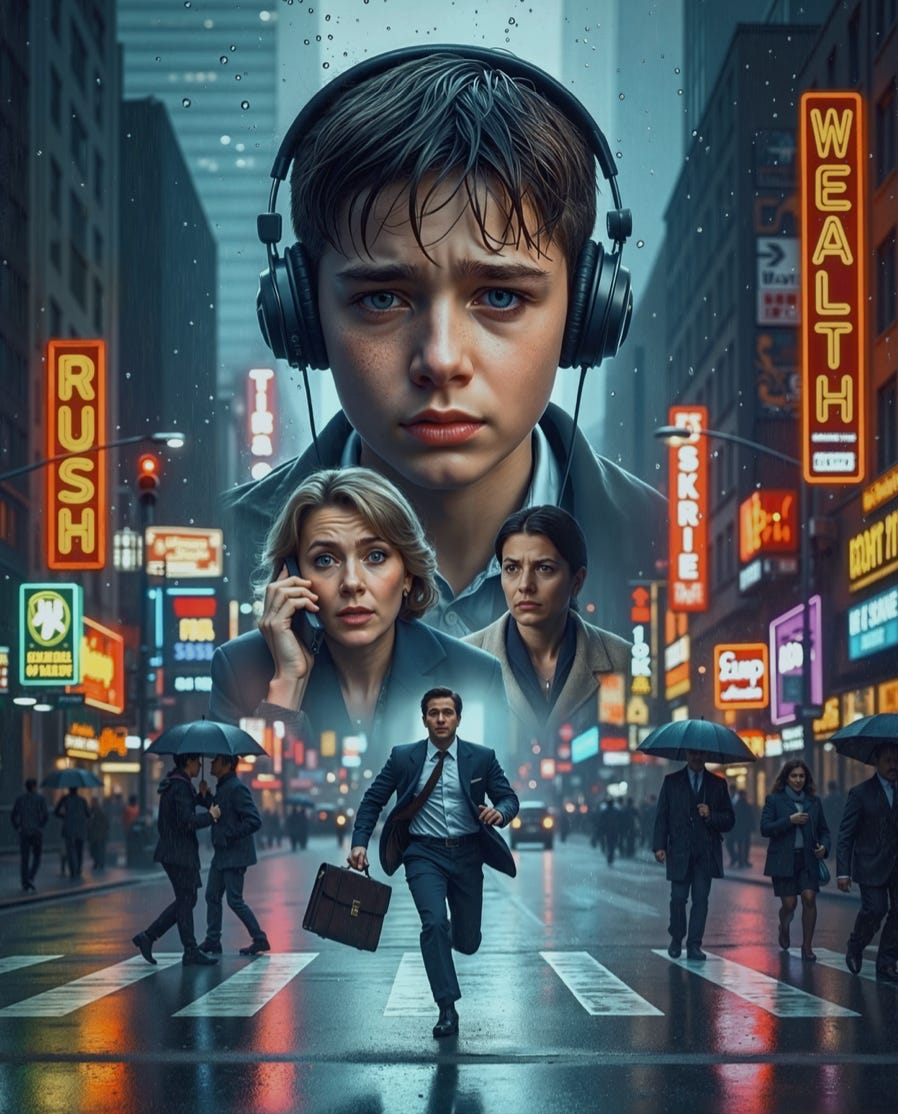
It all sounds so strange to me! Why did people keep up with it?
Oh, my dear boy, sometimes it’s so hard to see the power you have to put a wreck in the system, and so the power system lives on. People find a way to simply accept, not knowing how much change can come from the tiniest of imagination. But let me carry on.
A few years into this quiet revolution, you could begin to spot the differences. The most noticeable thing for me was people’s well-being. You could somehow see it in their eyes. They seemed more restful, more spirited, more one with the moment. There was presence.
But you also noticed it, of course, in the products and services available. It didn’t take long for the circular economy to really pick up and soon, people got used to renting instead of owning, which created a natural incentive for companies to produce products that would stand the test of time. Naturally, there was resistance, especially in the beginning. People didn’t like the idea of not owning.
But why would people want to own things? Then you’re responsible for taking care of it when it breaks.
Ha! That’s just the silliest thing, isn’t it? Back then, before The Decision, you weren’t that responsible. If something broke, you could just throw it away, and products were, for the most part, cheap enough that you didn’t care. It was so easy to find a replacement the same day.
But it must’ve created so much trash!
Oh dear, it did. It did…
As time went on, a new normal was planted and as people started to feel the benefits of doing things differently, things picked up quickly. Have your teachers ever shown you a hockey stick curve in school?
Yes, we talked about it in our class about global warming, to showcase where we were headed before the turning.
Exactly! Now, this was a different kind of hockey stick, a positive one. The truth was that all the solutions were already ready for us, just waiting to be implemented. All it took was a willingness to see things from a new perspective and trust that it could be even better this way. You had to let people get comfortable with the idea of change.
And all it took was The Decision?
Well, yes, and also no. The Decision finally pushed things over the edge, but there were so many brave and curious people working to build the new system, both before and after The Decision was made. We must always look back and be grateful for those who had the courage to question everything.
You were one of those people, Nana. You are a hero!
You’re too sweet, my dear boy. But yes, I guess, I am one of those people. And it was a big deal for me to choose to have kids; many others like me didn’t think there was a future worth bringing kids into the world for. A lot of people had already given up hope.
What else happened after The Decision was made? Can you tell me something cool?
Well, let’s talk about the Innovation Revolution.
You see, once money was directed in the right areas, many people found the courage to explore their ideas for more efficient and sustainable living. That dock next to your front door, for example, came about in these important times. Before that, most houses were powered by fossil fuels, which were essentially dead dinosaurs taken from the ground.
This part always blows my mind! Dead dinosaurs, really? That’s so cool!
Well, not really, not when you learn the price we had to pay for digging them up. As the saying goes: “Don’t mess with the dead.” Nothing could be more true about dinosaurs.
And the craziest part was that although we had learned that lesson long ago, money was still poured in masses to make sure we could access more fossil fuels. It was believed to be the only way the world would keep running, the only way people could hold on to the luxuries of modern life that we had gotten so used to. Turns out that all we needed was a nudge in the right direction, and incentives for moving on and exploring wildly different ways.
That is why houses today are mostly self-sufficient. As you know, that docket on your house tells you daily how much energy is being fueled by your solar panels, how much comes from the food waste operator, and how much depends on the collective movement of the city. It was a wild idea one woman came up with that we should harness the energy of people and use it to fuel our grids. She, among many others, laid the foundation for this new world you now live in.
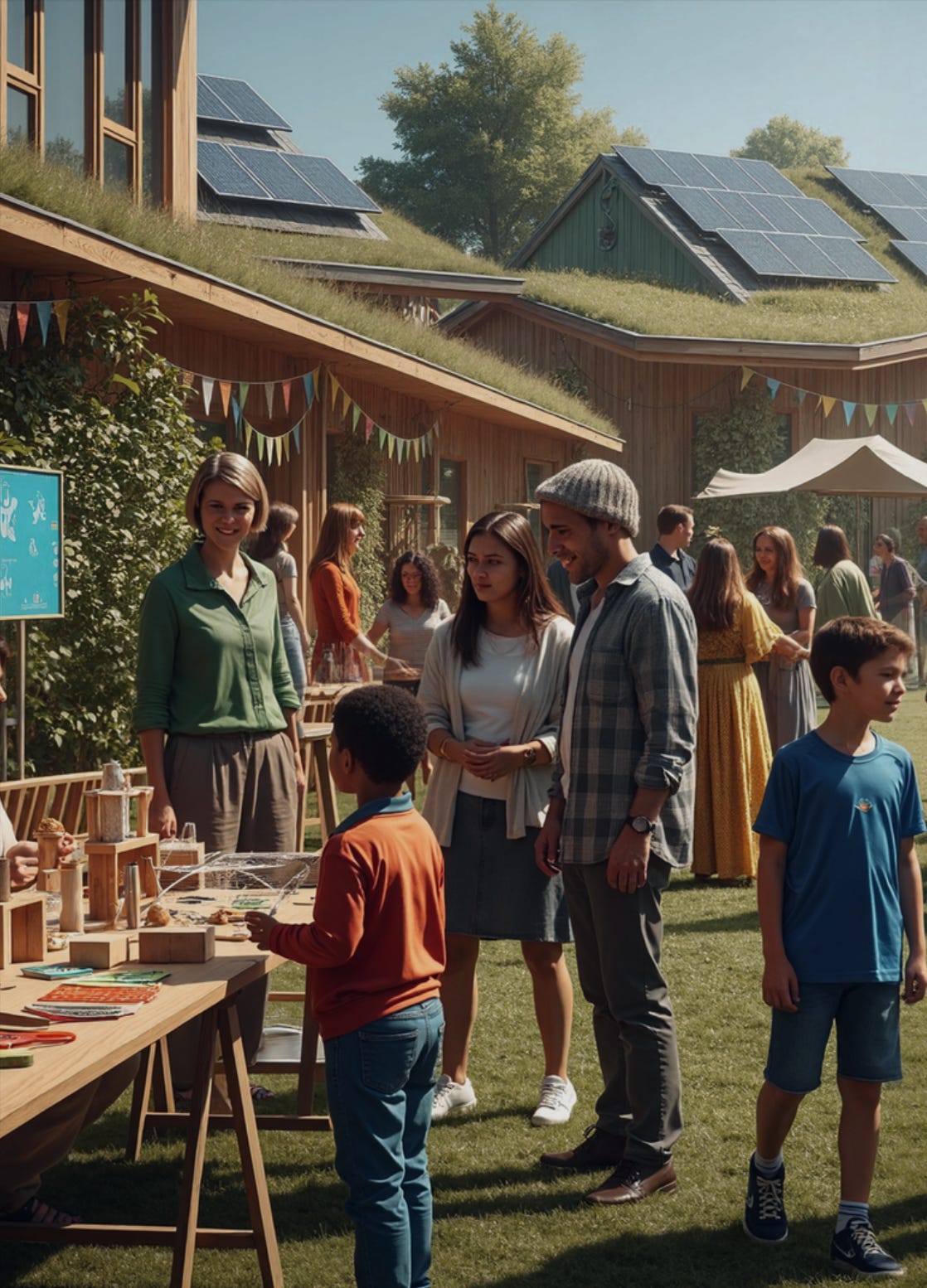
You always speak of it as the “quiet revolution”. Why is that?
Because it was unnoticeable to so many. People had gotten used to quick fixes, fueled by dopamine-hungry devices that kept us stuck looking for shallow things to make us happy. So when faced with a big challenge like our climate crisis, it was hard for most people to wrap their heads around what needed to be done. I attended many community meetings where someone would raise their hand and say: “But what can we do? What is the one thing that can be done?”
And that one thing was The Decision?
Haha! You can’t let go of The Decision, can you? Again, everything changed that day, but the road leading up to it had been paved by thousands, if not millions, thoughts, ideas, and people. It happened slowly and for a very long time and continued to unfold for years after the big shift occurred. As mentioned before, most people didn’t even notice it. It’s not until much later that they can look back and realize how much has changed – and for the better!
But you saw it, Nana, you noticed!
I did, because it was a beautiful thing to witness, and I made sure to pay attention to every little win.
Ok, but now you have to tell me – what was The Decision?
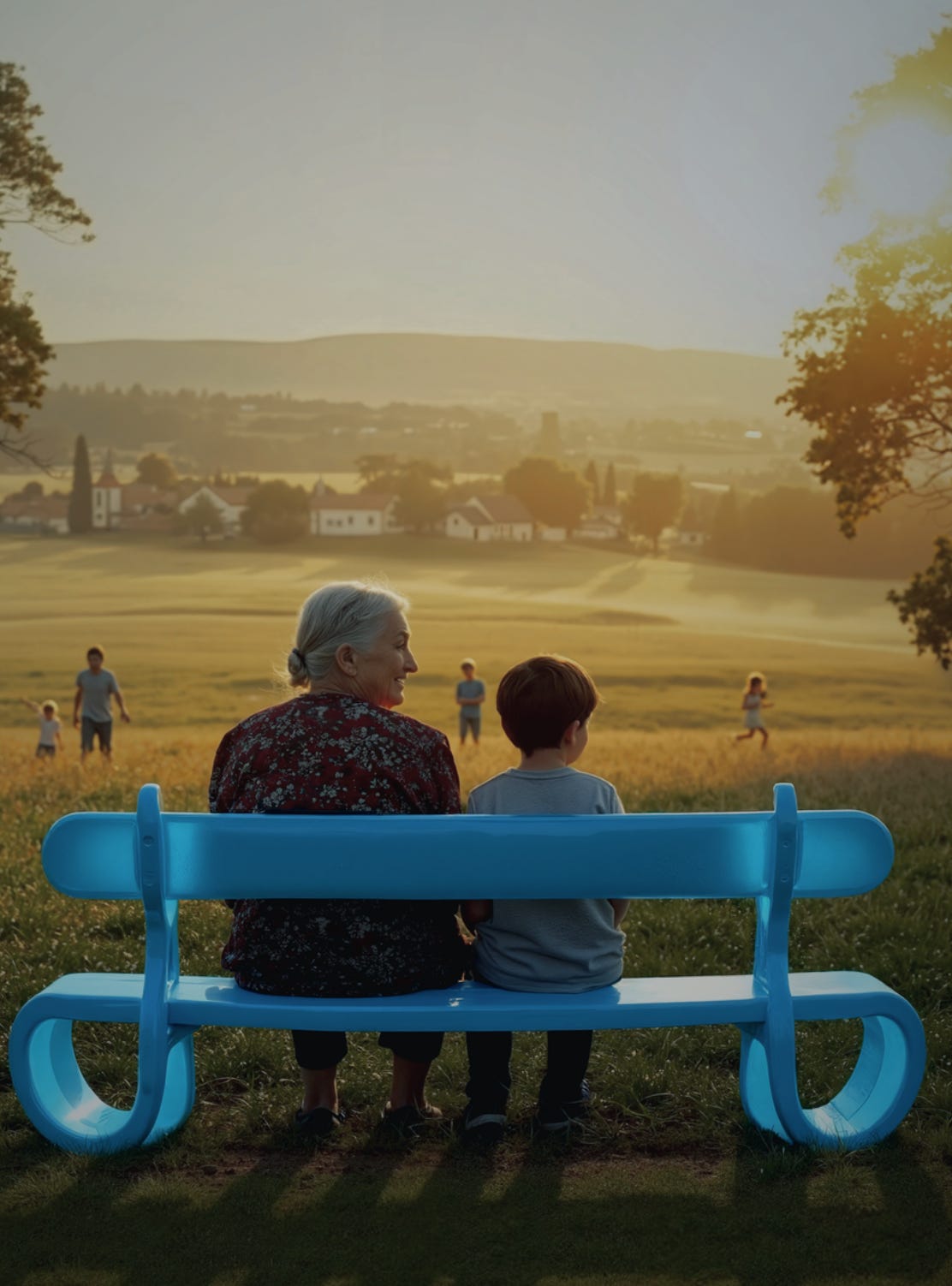
Behind the Story
The idea for this piece was downloaded during a walk in early last spring. I had been asked to contribute a short story to this upcoming book (I was honored), and the directions as to what it could be about were minimal.
It became quite clear to me that it should be told in retrospection by one generation passing on the history of this century to the next, with the intention to reflect on what the coming years could look like, and how they could open up momentous opportunities for change. By telling the story from the future, by a grandmother who, with pride in her voice, made sure her grandson got every detail that played a part in making the New World happen, I wanted to invite us all to reflect on just how important these years are.
Sure, some sort of decision was made, but she repeatedly points out that both before and after that critical moment in time, it was the work and courage of many people who made these changes possible.
We are those people today. We have the power to radically reimagine life as we know it, to bend our curiosity, and explore possibilities of very different tomorrows — not just in how we do and create things, but how we want to feel and the lives we want to lead. We have the power to activate this quiet revolution.
Some people may not notice these subtle changes, or even recognize that such changes are necessary, but if we who do continue to show up for them with optimism and faith, completely new worlds may unfold that everyone can take a part of.
So…Do I want to be part of the revolution? Or get stuck fighting the old? This future described above is obviously completely made up. It’s a bit of my imagination, my willingness to expand my heart and trust.
What if you expanded yours? What would we create?
Reflection/ Journaling Prompts:
The story is named “The Decision,” but even after all that build-up, you never learn what the decision actually was. I wrote it that way to leave room for imagination and for each reader to reflect deeper on what such a decision could look like. So… what do you think the decision was?
The future is wildly unimaginable — and perhaps in the best possible ways! If you kept some room in your heart for the unimaginable (a favorite quote of mine by Mary Oliver), what do you think the world might look like 50 years from now? What has changed? What stayed the same?
Bringing back focus to today: what is your mission? What are you showing up for (even it if feels small) that will help guide us into a different tomorrow? What is the positive footprint you’re growing and leaving behind?
What does your practice of optimism and imagination look like? Do you nurture it enough to stay in this state of wonder? If not, what could you do better? If the practife of (climate) optimism speaks to you, see below for more resources!
Valuable Resources:
Visit the future and practice your imagination with my Guided Meditation. You find links for where to listen here. Here’s what members inside our cohort just said about it:
I listened to the meditation on my work break, and it was really soothing experience. It calmed my mind and shifted my focus to positivity and I thought about all the things I could do just by believing and letting myself imagine.
When I started this meditation, I’ll admit I thought it was a little silly…
BUT when we were asked to step outside, everything changed for me. I knew exactly what I wanted to see and got excited about what that world could look like. I saw a neighborhood farm stand, bike train to the schools, neighbors meeting up with to-go coffee mugs, walking together to the nearest transit hub for work. It was GLORIOUS. I was like yes, this is what I want. It made me so excited.
Join us inside The Climate Optimist Cohort! If you want to strengthen your practices for radical optimism and explore new world possibilities with like-minded visionaries, this might be the place for you! Commit as much as you find time for — no strings attached, and you can join/leave whenever you want. Learn more here or contact me with interest. Membership is $20/month.
Don’t forget about the book — you can consume The Climate Optimist Handbook in audiobook format, ebook, or paperbook. See options for purchase here.
On that same page (scroll down), you also find the book’s discussion guide with questions and prompts to reflect deeper on individually or in a group setting. You don’t have to have read the book to work with these prompts.
Powerful framing through the grandmother's voice. The deliberate ambiguity around what The Decision actually was is genius beacuse it forces readers to grapple with their own agency instead of waiting for some institutional fix. I've been thinking alot about how the "quiet revolution" concept maps onto Elinor Ostrom's work on commons governance. The shift from ownership to stewardship you describe through the rental economy isnt just environmental its fundamentally restructuring property relations.
I think this work is so important because without imagining the future that we want, how can we and others stay positive and have any defence against the futures we don't want. That's why I started my Substack Newsletter — Afterseed and started my Novella — Plastic People.